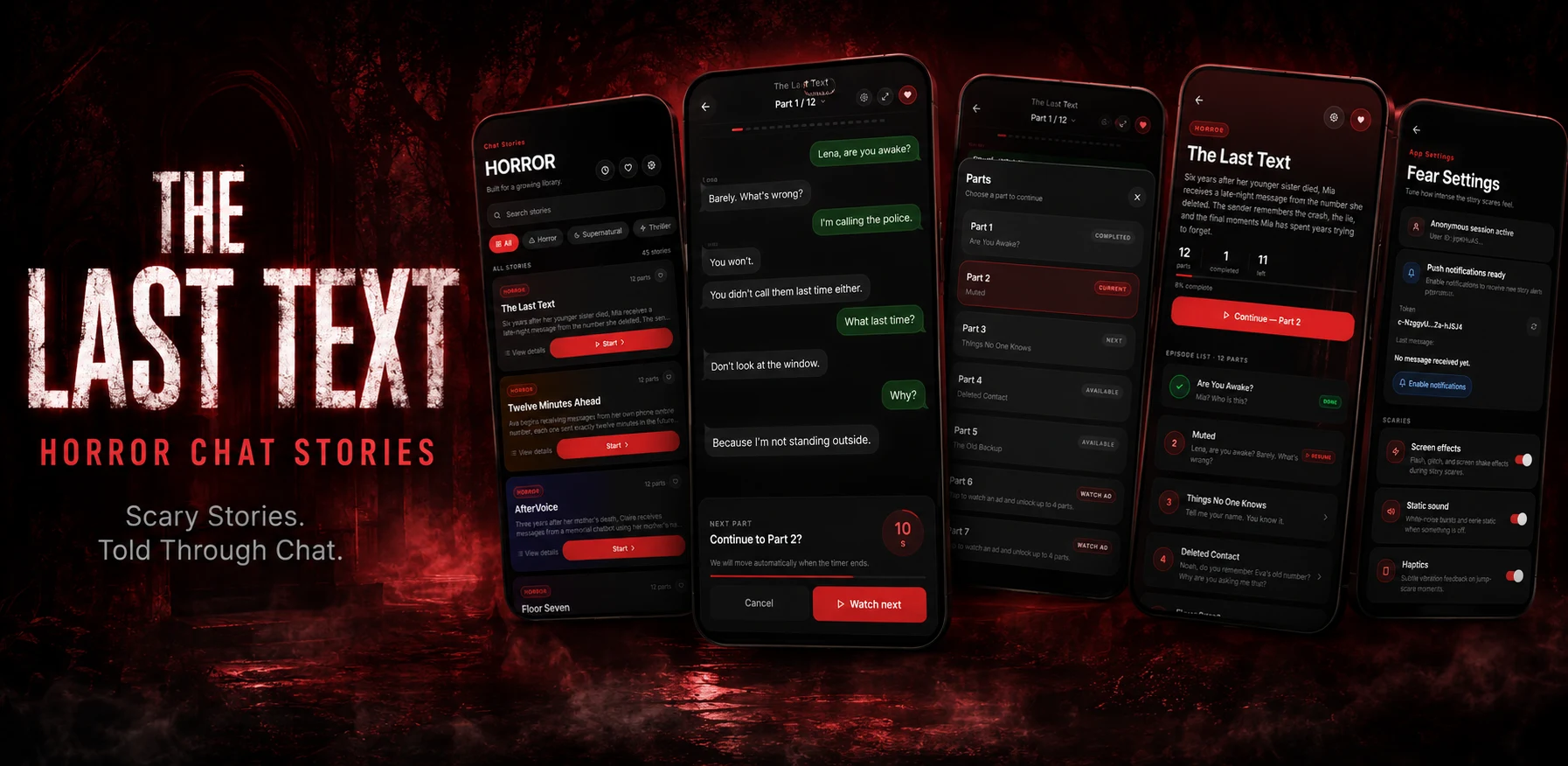
A chat story has almost none of the tools a horror writer usually relies on. No long descriptions, no narrator, no slow build across a page. Just messages appearing one at a time on a phone screen. This post takes apart a short scene written for this article, beat by beat, to show how Horror Chat Stories gets its scares from timing.
The scene
Read it once at normal speed. The small grey labels show the pause before each bubble appears.
are you still awake
who is this?
your kitchen light is on
how do you know that
turn it off. i want to see if you can
Breaking down the beats
| Beat | Delay | What it does |
|---|---|---|
| Unknown number, 2:47 AM | — | Sets the stakes before a word is read |
| "are you still awake" | 0.0s | Ordinary on purpose; lowers the guard |
| "your kitchen light is on" | 2.5s | The first detail that should not be known |
| Typing… | 4.0s | The longest pause in the scene, where dread builds |
| Final line | 0.8s | Arrives fast after the wait, so it lands as a jolt |
The scariest bubble is often the one that has not arrived yet.
How an episode is shaped
- Unknown numberOne line that raises a question
- Small talkLower the guard
- Something's offA detail that does not fit
- Your choiceReply, ignore or check
- Typing…The pause before the scare
Writing rules we follow
The first bubble is the hook
If it does not create a question, people swipe away.
Write like people text
Lowercase, short, occasionally wrong. Polished prose breaks the illusion of looking at someone's phone.
Tune delays per message
A quick exchange builds momentum; a long typing indicator builds dread. Small changes make a large difference.
Let choices matter, a little
Most choices change a few lines and the tone; a handful lead to different endings. Readers feel involved and the story keeps its shape.